
Research Direction Introduction
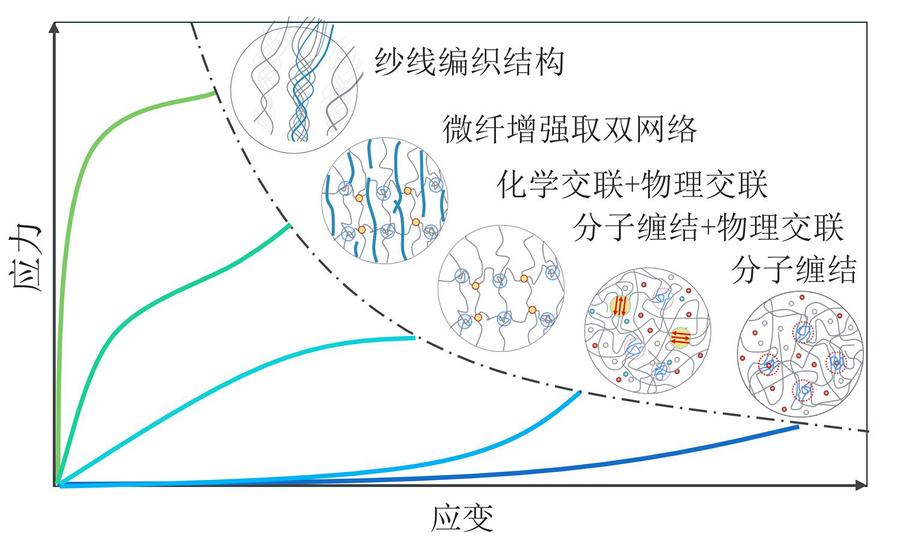
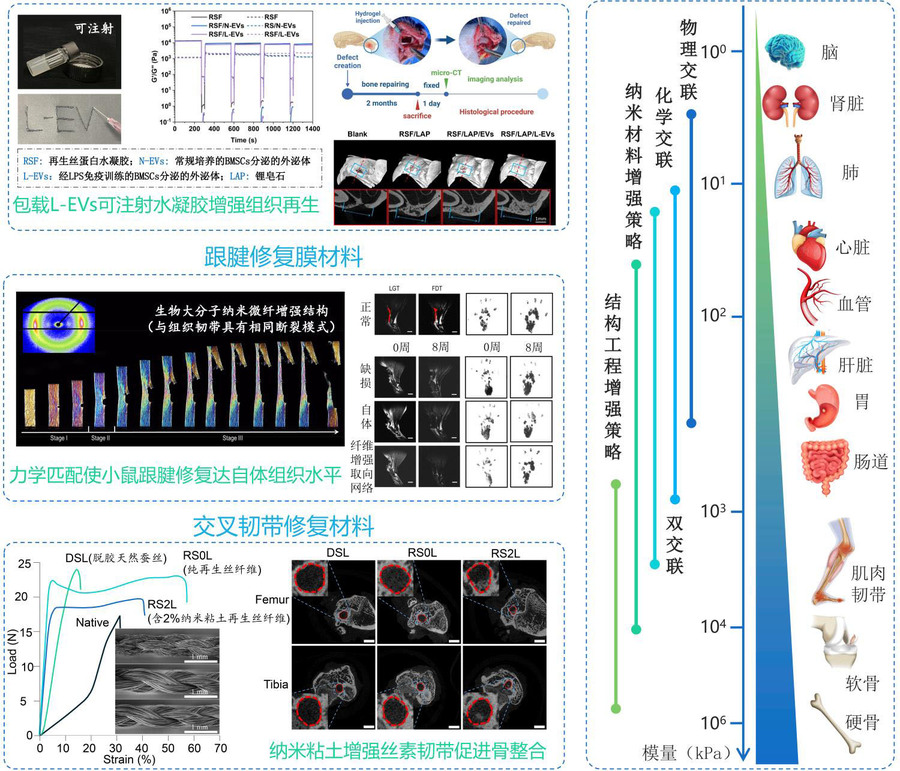
As a natural protein material with excellent biocompatibility and controllable degradation characteristics, silk fibroin can precisely regulate its molecular secondary structure through chemical methods (such as enzymatic crosslinking) and physical methods (such as molecular entanglement and nanocrystalline crosslinking) to achieve better mechanical matching with biological tissues. Furthermore, material strength can be further enhanced by introducing biomacromolecular microfibrils or inorganic nanocomponents. At the macroscopic scale, silk fibroin can be fabricated into regenerated fibers, yarns, and various solid-state structures, providing a wide mechanical range from injectable to high-strength properties to meet different tissue engineering repair requirements from brain tissue to hard bone tissue.
Silk protein tissue engineering material mechanical regulation strategy
Injectable hydrogel
Copyright © 上海复旦大学

