
Research Direction Introduction
Contemporary biomacromolecular science has expanded from traditional polymer disciplines to the interdisciplinary fields of materials biology, chemical biology, and information science, with material construction concepts gradually shifting from engineering-oriented to green and intelligent approaches. Therefore, rational design strategies based on data-driven and empirical paradigms, guiding chemical biosynthesis, structural fabrication, and systematic characterization through computational simulation and artificial intelligence, are becoming an important research paradigm for optimizing the synergistic effects of material structure-property-function, reducing development costs, and moving away from traditional trial-and-error experimental methods.
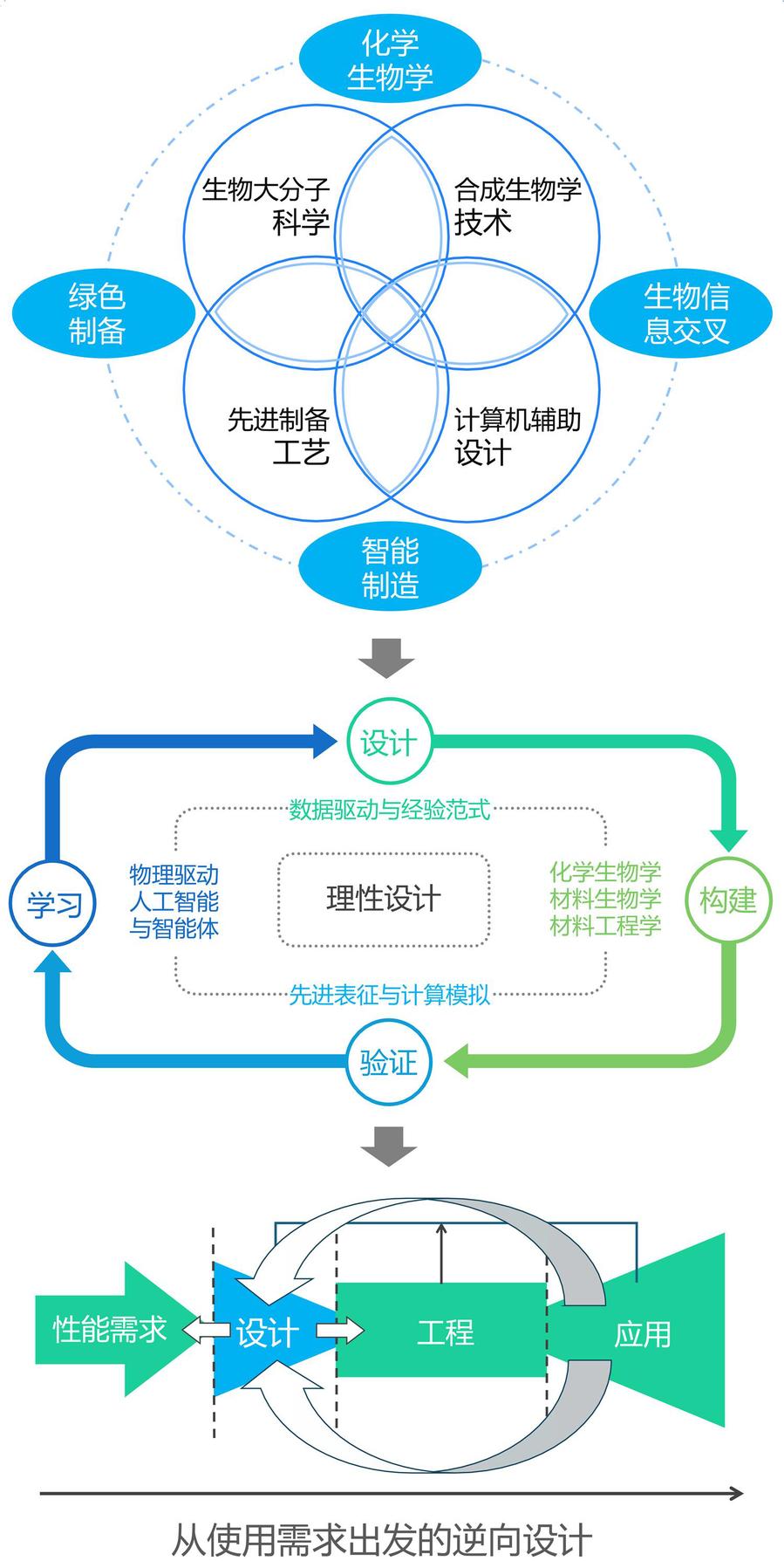
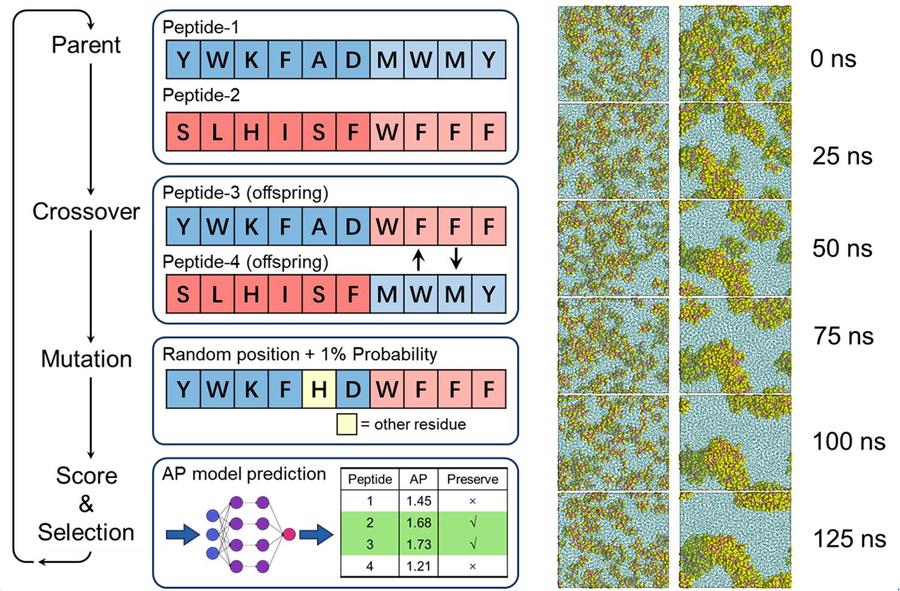
Sequence-based rational design
(Using deep learning to predict peptide self-assembly propensity)
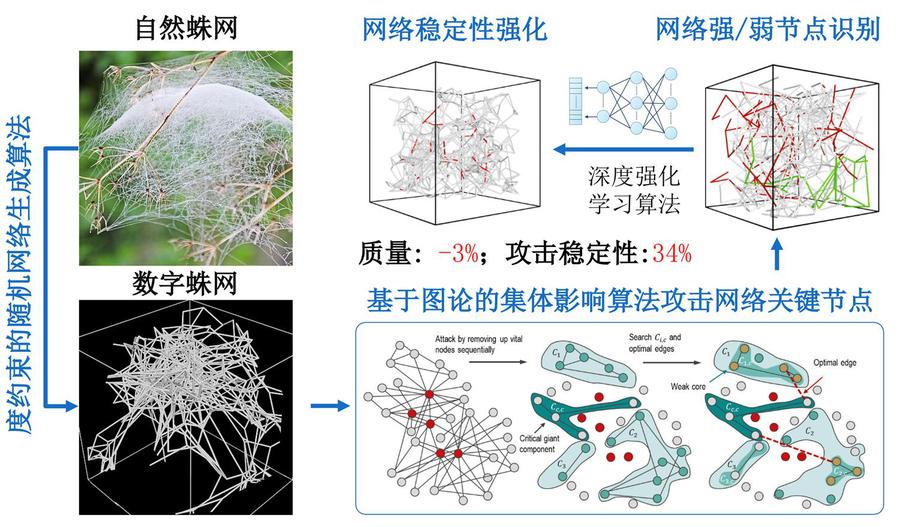
Rational Design Based on Topological Structure
(Deep reinforcement learning designs highly stable disordered fiber networks)
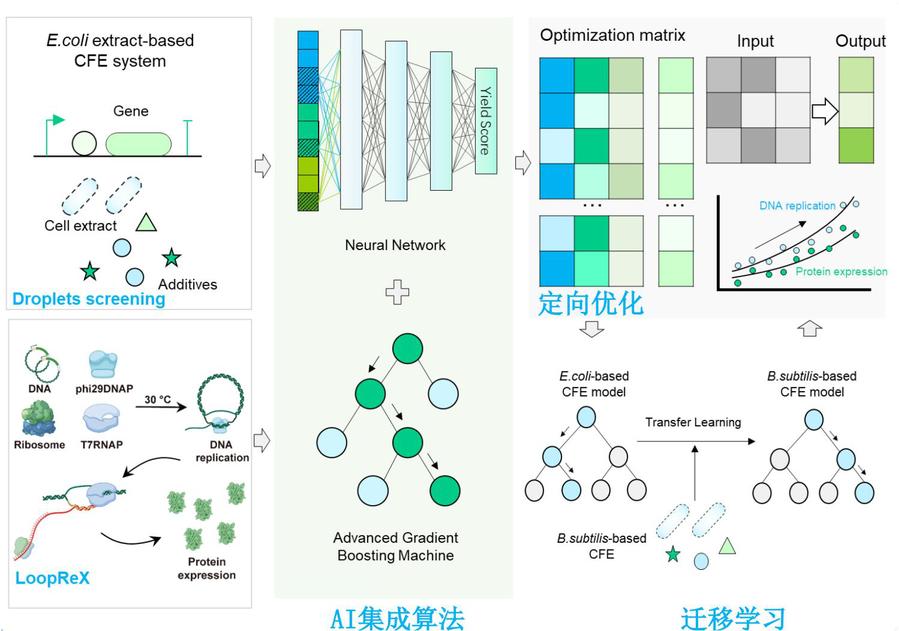
Rational Design Based on Synthetic Biology
(AI integration algorithms improve the efficiency of complex system replication and expression)
Copyright © 上海复旦大学

